
The "Fundación Galileo Galilei - INAF, Fundación Canaria" (FGG) is a Spanish no-profit institution constituted by "INAF", the Italian Institute of Astrophysics.
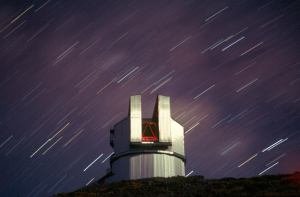
The FGG's aim is to promote the astrophysical research, as foreseen in the international agreement of May 26, 1979 ("Acuerdo de Cooperación en Materia de Astrofísica, B.O.E. Núm.161, 6 Jul 1979"), by managing and running the Telescopio Nazionale Galileo (TNG), a 3.58m optical/infrared telescope located in the Island of San Miguel de La Palma, together with its scientific, technical and administrative facilities.
Latest news
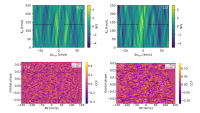
Probing the Cloudy Sky of the Inflated Hot Jupiter WASP-13b with GIARPS at the TNG
A new study led by the GAPS (Global Architecture of Planetary Systems) collaboration has provided unprecedented observational constraints on the atmosphere of WASP-13b, an extremely low-density and inflated hot Jupiter orbiting a G1-type star every 4.35 days. Using the GIARPS observing mode at the Telescopio Nazionale Galileo (TNG), the team performed high-resolution transmission spectroscopy across multiple transits to search for atomic and molecular signatures in both the optical and near-infrared domains.

AOT55 Call for Proposals. Deadline submission on Monday Nov 23rd, 12:00 UT
The available time offered in this call at TNG via INAF-TAC is 39 nights, 14 of which are reserved to exo-planetary research programs (see special notices below) and 25 are for other science programs. We encourage applicants to submit proposals asking a row of consecutive nights to be done in visitor mode. The budget can increase if not all the nights offered in other calls will be effectively allocated by the respective TACs. The foreseen schedule breakdown is reported at the bottom. All proposals will be judged strictly on their scientific merit.
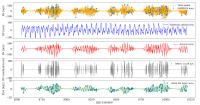
How massive are newborn planets? A closer look at the young V1298 Tau multi-planet system